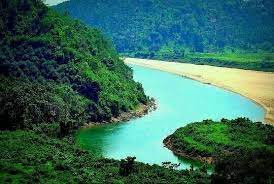
It is an enormous forest where rows of trees stand in a wetland. Their trunks are submerged in water. This woodland is so dense that even the scorching sunlight cannot penetrate the leaves to reach the water below. That is why a large portion of this forest remains greenish in color. When you look around, all you see are water and trees. The highland is beyond your sight. It may give you the impression that you are trapped in a submerged forest. This is not the end. There is danger everywhere. While exploring this jungle, visitors may come across snakes hissing from nearby trees and anonymous birds flying overhead. Apart from the sound of water droplets and the rustling of the wind, no other noise will reach your ears. Birds such as eagles and vultures perch atop the trees, waiting for their prey. Upon reading such a description, the first thought that may come to your mind is the Amazon forest. However, you will be astonished to know that this narrative is about Ratargul Swamp Forest. It bears a striking resemblance to the Amazon. Because of this similarity, it is often referred to as the Amazon of Bangladesh.

In the local language of Sylhet, the Murta plant, the raw material of which is used for making Shitalpati, is known as “Ratagach.” This forest is named Ratargul after this Murta, or Ratagach, tree.
Brief
history:
It is essential to have basic information about Ratargul Swamp Forest before planning your visit. It is the only recognized swamp forest in Bangladesh. Moreover, it is one of the twenty-two freshwater swamp forests globally, which attracts visitors from both within the country and abroad. In the Indian subcontinent, there are only two of them—one is located in Sri Lanka, and the other is in our nation. The water in this forest is as clear as crystal. You can not only see the reflections of the trees in the water, which makes the water appear green, but you can also see the bottom layer. The Government of Bangladesh has taken measures to preserve this forest under the Department of Forestry.
As the season changes, the beauty of this forest changes too. For this reason, it looks different in different seasons. The diversity of its natural environment draws the attention of tourists throughout the year. However, the best time to visit Ratargul is during and after the rainy season.
Ratargul Swamp Forest is connected to the Gowain River via a lake named Chengir Khal. During the rainy season, water coming from the hills of India flows into the lake through the river and submerges the entire forest. This state of weather remains the same from May to early October, and the temperature stays around 32 degrees Celsius. It drops to 12 degrees Celsius in January. During the monsoon season, the depth of water ranges from 20 to 30 feet, while the water level decreases to 10 feet throughout the rest of the year.
However, during the winter season, we can see a completely different scenario. The forest becomes dry at this time, and only the water reservoirs excavated inside the forest retain water. This area transforms into a sanctuary for migratory birds.
If you visit Ratargul Swamp Forest, you can try kayaking. The thrill you experience while navigating a kayak is distinctly different from traveling by boat. With a kayak, you can enter any part of the forest and stop whenever you wish, something a boat cannot offer. Once inside the forest, take a moment to sit silently in the kayak, where sunlight cannot penetrate due to the dense trees. All around, even in broad daylight, you can hear the chirping of crickets, the murmur of the stream, the sudden flapping of birds’ wings, and see huge trees rooted in the water, along with the panoramic views from the watchtower. Above all, you are bound to be impressed.
Location:
To visit this marshland forest, travelers will have to go to Gowainghat Upazila of Sylhet Division. This unique swamp forest is located approximately 26 kilometers from Sylhet city. The total area of the forest spans 30,325 acres, of which 504 acres were declared a wildlife sanctuary in 1973.
How
will you go there?
If you reside in Dhaka or any other division of Bangladesh, you must travel to Sylhet first. From Sylhet, your next destination will be Ratargul. There are two primary routes to get there. The choice of which route to take is entirely yours.
Firstly, let us discuss the easiest route to reach Ratargul Swamp Forest. To do this, you need to hire an autorickshaw from Ambarkhana Point in Sylhet city. The journey may take approximately one and a half hours to reach Motorghat. From there, you can rent either an engine-driven boat or a regular boat, which will probably cost Tk 300–400 per person. After your visit, you will return to Sylhet using the same route.
The second option is expensive as well as time-consuming. If you intend to visit Jafflong at the same time on the same route, you can proceed with this plan. This journey also requires the use of two boats to navigate through the forest. You may opt for an autorickshaw from Ambarkhana Point in Sylhet city or take a bus bound for Jafflong from Sobhanighat as your mode of transportation. Whatever transport you choose, you have to travel to Gowainghat Upazila, which is approximately a two-and-a-half-hour journey. After reaching there, you have to hire an engine-run boat for a round trip on a contract basis. It may cost around Tk 1,500. Boarding this boat, you will have to go to the Forest Bit Office of Ratargul. There, you have to shift to smaller boats to enter the forest.
If you are visiting for the first time, it is better to hire a guide. A guide may charge BDT 150 per hour.
Flora
and Fauna:
The presence of different species of plants and animals has significantly enhanced the appeal of this forest. To date, it is home to 73 species of plants, which cover 80 percent of the forest with their upper parts, commonly referred to as the umbrella of the trees. While exploring the forest, visitors will often see Banyan trees. Apart from these, one can see Millettia pinnata (Koroch tree), Barringtonia acutangula (Hizal tree), Sacred Garlic Pear or Temple Plant, and Alstonia scholaris (Chatim tree). Although it is a natural forest, the Forestry Department of Bangladesh has planted several aquatic plants, including Calamus tenuis, Burflower Tree, Schumannianthus dichotomus, etc.
After exploring Ratargul Swamp Forest, you may feel tempted to swim in the water. However, do not attempt to do so because this submerged area is inhabited by numerous venomous and dangerous animals, most of which live underwater. Snakes and worm snakes are frequently seen in this waterlogged forest. In the dry season, mongooses can be spotted. Additionally, this area is inhabited by monkeys, water monitors, insects, and various bird species, including Heron, Egret, Kingfisher, Parrot, Bulbul, Swan, Dove, Waterfowl, Eagle, and Kite. The best time to watch Cotton Pygmy Geese, migratory birds, and the nearly extinct Vulture is during the winter season. It is also a source of several local fish species, including Batasio, Rita, Pabda, and Rohu.
Precautions:
This submerged forest is not a safe destination for tourists who lack swimming skills. Boats may capsize and cause the death of visitors. To prevent drowning due to a boat accident, you should wear a life jacket. During the rainy season, when the water level rises, venomous snakes take shelter in the trees. If you visit the place at this time, avoid touching the trees or water carelessly. For added safety, you can also carry carbolic acid.
Food
and accommodation facilities:
There is no good restaurant close to Ratargul Swamp Forest. Therefore, visitors are advised to collect any food items they need from Gowainghat Bazaar. In Sylhet city, there are several high-quality hotels. You can choose any of the hotels according to your needs and budget. It is heard that the Department of Forest is building a rest house for tourists. It will undoubtedly help provide accommodation for them.
In the end, I would like to request everyone to refrain from polluting the forest by littering empty bottles, packets of chips, and biscuit packets here and there. We must remember that this is our valuable resource, so it is our responsibility to keep it neat and clean.